

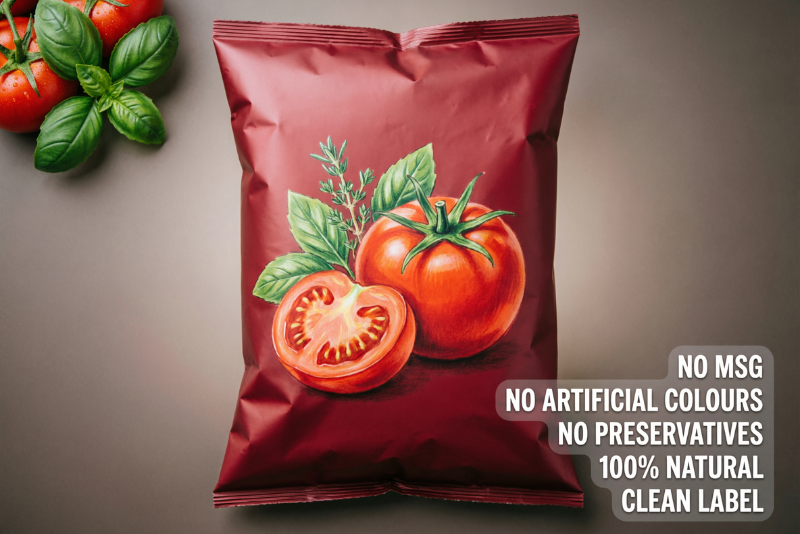
I used to have a folder on my laptop dedicated to “Innovation Pitches.” It was a graveyard of beautifully designed decks. And for the last three years, every single one of them—had the same exact slide.
Slide 14: The Ingredient Deck.
It would feature a serene photo of natural ingredients like pandan leaves or ginger root, next to a bullet-point list that screamed: “NO MSG. NO ARTIFICIAL COLOURS. NO PRESERVATIVES. 100% NATURAL. CLEAN LABEL!”
My R&D director would lean forward, eyes gleaming, and whisper, “This is our key differentiator.”
And every time, I would lean back, take a sip of my kopi o kosong, and think: “Congratulations. You’ve met the absolute bare minimum to be allowed on the shelf next to the Ayam Brand Sardines.”
Welcome to 2026. “Clean Label” is the biggest lie marketers are telling themselves in the boardroom. It’s not a differentiator. It’s not a USP. It’s not a premium lever. In the FMCG market today, Clean Label is the price of entry. It’s a minimum requirement.
If you’re building your entire brand story around having a short ingredient list, you are not a premium insurgent brand. You are just keeping up with Gardenia.
The Fatal Mistake: Confusing a Hygiene Factor with a Hero
In corporate strategy, we borrow a framework from Herzberg’s Motivation-Hygiene Theory. It applies brutally well to FMCG.
Hygiene Factors are things that, if absent, cause massive dissatisfaction. But their presence doesn’t cause satisfaction or loyalty. Think of it like this: You don’t choose a hotel because it has clean sheets. You expect clean sheets. If the sheets are dirty, you burn the place down on Google Reviews. But if they are clean, you don’t write a review saying, “Wow! The sheets were remarkably free of bed bugs! 5 stars!”
For consumers in 2026, a clean ingredient deck is exactly that: a clean sheet.
Here is the hard data that corporate teams are looking at but startup founders are ignoring:
The 9-in-10 Reality: 9 out of 10 Southeast Asian consumers check nutrition labels before buying their food. They aren’t just looking; they are judging.
The Natural Expectation: “Natural is the new normal” is the headline from Fi Asia 2025. It’s not a trend; it’s the baseline. The Asia-Pacific Clean Label Ingredients market is projected to nearly double from ~$10.4 billion in 2024 to over $20 billion by 2033.
The Consumer Attitude: Consumers expect foods and beverages to meet high standards, with bold flavors, familiarity, and safety. Natural ingredients simply “resonate” with them—it’s expected.
If your brand’s entire “innovation” is removing the MSG that Lotus’s house brand already removed last year, you are bringing a hygiene factor to a hero battle.
The Willingness-to-Pay Gap: Why “Premium Clean” is a Myth
This is the section that usually makes founders. “But we use real Madagascar vanilla! It costs more! We have to charge RM24.90!”
Let’s talk about the Malaysian wallet. According to the Malaysia Consumer Trend Report 2025, 91% of Malaysians say they are open to buying sustainable products. That sounds amazing, right? Everyone wants to be virtuous.
But here is the brutal part: Most are only willing to pay less than 10% more for them.
Less. Than. Ten. Percent.
So, you spent 40% more on your COGS (Cost of Goods Sold) to replace a synthetic preservative with rosemary extract and a fancy fermentation process. And the consumer in Lotus’s is looking at your RM24.90 bottle next to the RM15.90 bottle thinking, “Is this real vanilla worth the extra RM9 for my kid’s pancake breakfast?”
The answer, 9 times out of 10, is “Tak payah lah.”
The “Clean Label Premium” is a corporate fantasy. In the real world of the supermarket aisle, consumers are squeezing every sen. They want the clean label, but they expect you to eat the cost. As the FMCG Gurus report highlights, price sensitivity is clashing directly with the demand for naturalness.
The “Clean Label Saturation” in the Malaysian Aisle
Walk into a Village Grocer or a Jaya Grocer. Look at the “healthy” or “alternative” aisle. Pick up five random jars of pasta sauce or nut butter.
I guarantee you, at least four of them will have the word “Natural” or “No Nasties” or “Clean Ingredients” on the front. It has become visual white noise.
Even the global giants—who used to rely on Yellow 5 and high-fructose corn syrup—have flipped the script. PepsiCo’s recent rebranding of Lay’s and Tostitos is a perfect example. They are eliminating artificial dyes and swapping processed oils for avocado and olive oils, with messaging that simply says “Made with potatoes, oil, and salt”. As one industry publication noted, “Clean-label eating has gone from trend to table stakes”.
When Lay’s is clean label, you don’t get to charge a premium for being clean label. You just get to exist in the same conversation.
So What Do You Sell When “Clean” Is No Longer Enough?
If you’re a Malaysian startup founder reading this, do not panic. You don’t need to go back to using chemicals. You just need to evolve the narrative.
Here is the 2026 Playbook for moving beyond the Ingredient Deck Lie:
- Move from “Clean” to “Clear.”
As industry experts note, “Clean isn’t a differentiator anymore—it’s the price of entry”. The future is “Clear Label.” Don’t just tell me what’s not in there. Tell me why what is in there is there.
Bad: “No preservatives!”
Good: “We use fermented tapioca starch (tapai ubi) to keep this fresh, just like your grandmother did.”
- Solve the “Ultra-Processed” Problem, Not Just the “Artificial” Problem.
The conversation is shifting. Global scrutiny on Ultra-Processed Foods (UPFs) is intensifying, and Malaysia is evaluating front-of-pack warning labels and updated nutrient profiling.
Consumers are starting to look beyond “natural flavors” and asking, “How many steps did this food go through?” If your “clean” granola bar is still highly processed, the next wave of regulation will catch up to you. Position yourself as minimally processed.
- Layer on the “Halal + Tayyib” Dimension.
In Malaysia, we have a superpower. “Halal” is the hygiene factor. “Tayyib” (wholesome, pure, good) is the hero. A clean label aligns perfectly with the Islamic concept of Tayyib. Use that narrative. It resonates deeper than just “non-GMO.”
- Price for the Hygiene Factor; Charge for the Function.
This is the most important business lesson. Do not build your margin model around “clean.” The market will not pay for it.
Hygiene Factor: No artificial junk. Cost: You absorb this or achieve it through efficient sourcing.
Hero Factor: Gut health (probiotics), cognitive function (nootropics), local heirloom ingredient sourcing. Charge for this.
The Final Word
Stop treating your ingredient deck like it’s a trophy. It’s not. It’s your admission ticket.
The next time you’re tempted to put “Clean Label” as a key pillar on your investor pitch deck, delete it. Replace it with something that actually matters: “Proven Gut Health Efficacy” , “100% Traceable Malaysian Farm Sourcing” , or “Halal-Tayyib Certified Supply Chain.”
Those are stories worth telling. “No MSG” is a story worth 1995.
Now, if you’ll excuse me, I’m going to go eat some keropok lekor. I have no idea what’s in it, but it’s delicious, and sometimes, that’s still the ultimate differentiator.
